
Is Social Media Hurting Your Daughter More Than She Admits? 5 Warning Signs Christian Parents Miss

Hey there, and welcome back to our series on teen mental health. If you’re just joining us, we are right in the middle of a 5-day journey looking at how the digital world is shaping the hearts and minds of our kids. Yesterday, we talked about how to get your teen to actually open up to you. Today, we’re shifting our focus specifically toward our daughters.
As parents, we want to believe our girls are okay. We see them smiling in their selfies, keeping up with their friends, and staying busy with school. But beneath that polished digital surface, many teen girls are carrying a weight they don’t know how to describe. In a world that tells them their worth is measured in likes, views, and perfectly filtered skin, the pressure can become a heavy burden that slowly erodes their peace and self-worth.
At Grace Journey Counseling, LLC., we see this every day. We see bright, talented young women who feel "trapped and isolated" despite having thousands of digital "friends." We believe that every girl is a masterpiece, created in the image of God, and our goal is to help them reclaim that identity.
But before we can help them heal, we have to recognize when they are hurting. Sometimes the signs aren’t as obvious as a tear-streaked face. Often, they are subtle shifts in behavior that we might miss in the hustle and bustle of a fast-paced world.
Here are five warning signs that social media might be hurting your daughter more than she’s letting on.
1. The "Mirror Trap": Obsessive Comparison and Body Dissatisfaction
We all know that social media is a highlight reel, but for a teen girl, those highlights often become the standard she feels she must meet. Research shows that teen girls report social media makes them feel worse about their lives and their bodies at much higher rates than boys.
If you notice your daughter spending an excessive amount of time checking the mirror, criticizing her appearance, or perhaps even skipping meals after spending an hour on TikTok or Instagram, she might be caught in the comparison trap. This isn’t just vanity; it’s a deep-seated struggle with identity. When she looks at a filtered influencer, she isn't seeing a person, she's seeing an impossible ideal.
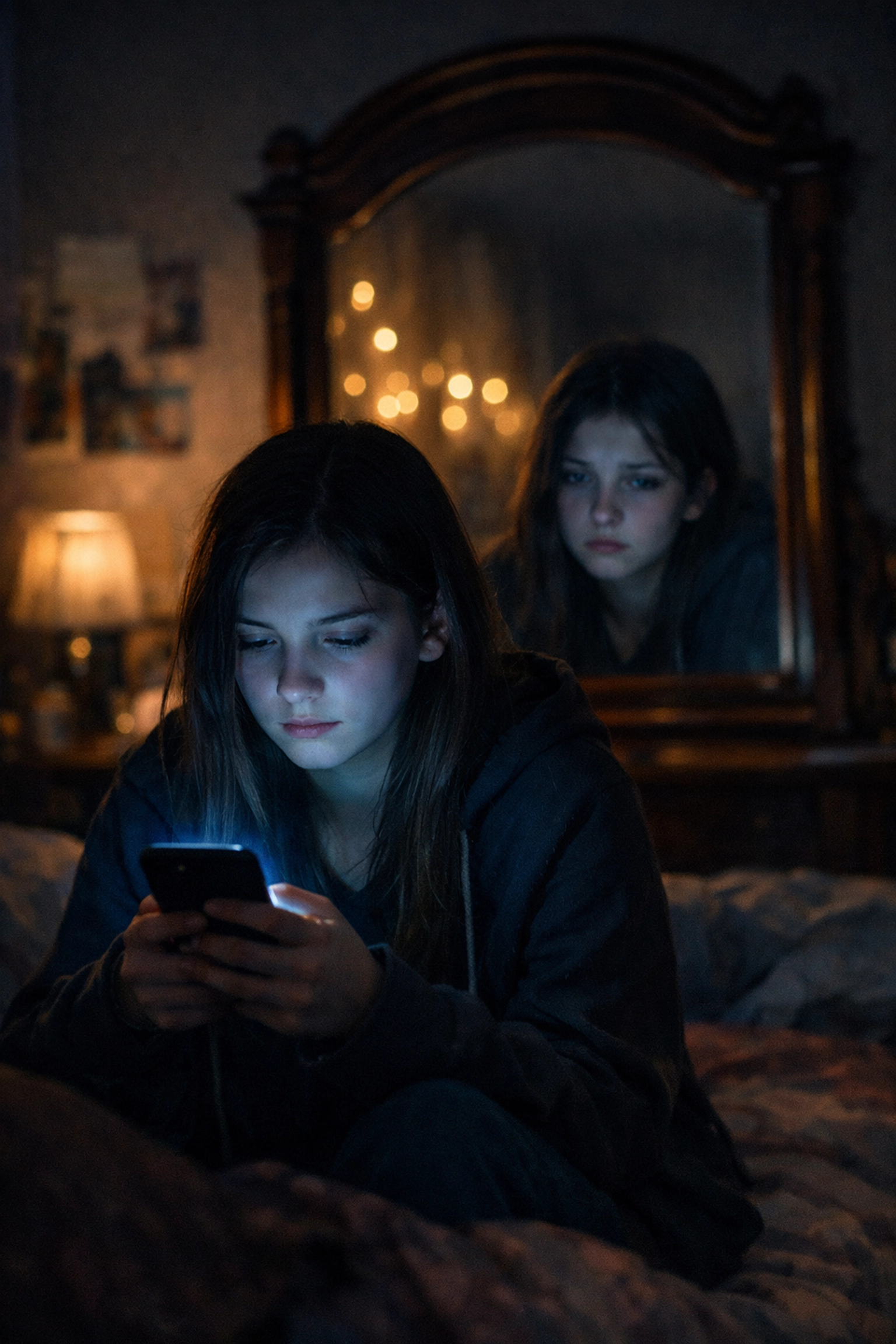
As Christian parents, we can remind our daughters that their beauty isn't something to be manufactured for an audience. It is something inherent, given by a Creator who calls them "fearfully and wonderfully made." If she seems constantly discouraged by her reflection, it might be time to step in with grace and perhaps seek a faith-based perspective on self-worth.
2. The Midnight Scroll: Sleep Disruption and Anxiety
Have you noticed your daughter looking extra tired lately? Maybe she’s irritable in the mornings or struggling to focus on her homework. One of the biggest red flags of social media harm is the "midnight scroll." Statistics tell us that nearly one-in-three adolescents are using screens until midnight or later on school nights.
This isn't just about losing sleep; it’s about what happens during those late-night hours. Without the "filter" of daytime logic and parental presence, girls can fall down rabbit holes of negative content, cyberbullying, or "FOMO" (fear of missing out). The blue light from the phone suppresses melatonin, but the emotional content keeps the brain in a state of high alert.
If your daughter is constantly "plugged in" until the early hours, her brain isn't getting the rest it needs to process emotions. This often leads to a spike in anxiety and a sense of hopelessness. Rest is a gift from God, and helping our daughters reclaim their sleep is a vital step toward mental restoration.
3. The "Ghost" at the Dinner Table: Social Isolation Despite Being "Connected"
It sounds like a contradiction, doesn’t it? How can someone be isolated if they are constantly texting and posting? Yet, many girls feel more alone than ever. If your daughter is physically present, sitting at the dinner table or on the couch with the family, but is mentally "miles away" on her phone, she might be experiencing digital isolation.
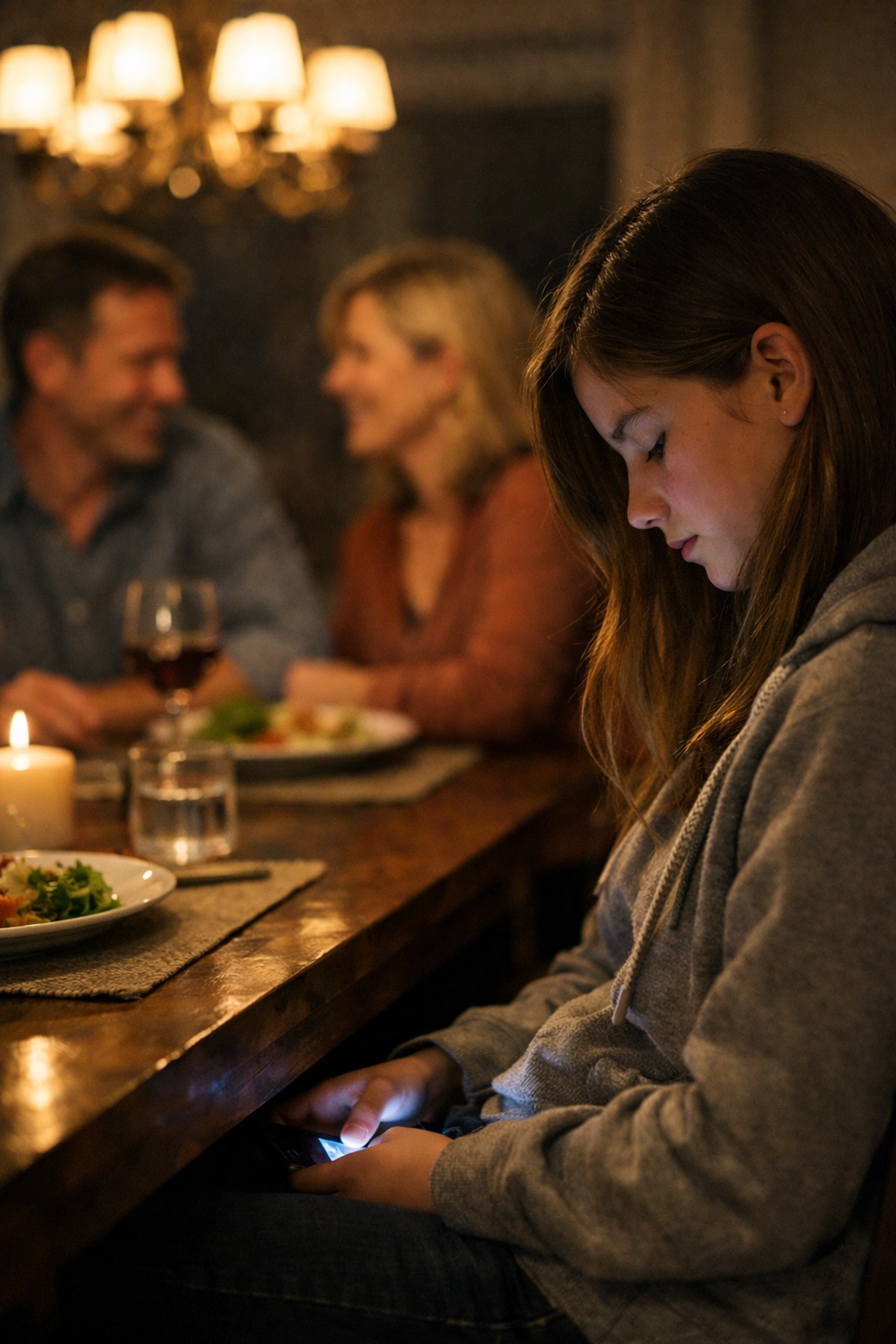
When a girl relies solely on digital interaction, she misses out on the nuances of real-world connection: eye contact, a shared laugh, or a comforting hug. Sometimes, the pressure of "keeping up" with friends online is so exhausting that she withdraws from the people who actually love her in person. If she seems more interested in her phone than in her real-life friendships or family activities, it’s a sign that her digital life is overshadowing her real one.
We encourage parents to view these moments not as a reason for anger, but as a call for connection. At Grace Journey Counseling, LLC., we help families bridge this gap, moving from digital isolation back into authentic community.
4. Rejection Sensitivity: The "Like" Economy
Does your daughter’s mood swing based on how many "likes" her latest post received? Or does she spiral into sadness if a friend didn't "heart" her story? This is often called "rejection sensitivity," and social media is a breeding ground for it.
For teen girls, digital engagement acts as a form of social currency. When the numbers are high, they feel a temporary "hit" of dopamine. When the numbers are low, or when they feel "excluded by friends" (which 36% of girls report happening online), they feel a deep sense of rejection.
If you see her constantly deleting posts that "didn't do well" or if she becomes visibly distressed by a lack of digital engagement, she is letting an algorithm define her value. This is a heavy burden for any young heart to carry. Helping her find her "anchor" in Christ, someone whose love is not based on performance, is essential. You might find our post on loneliness and anxiety in teens helpful in understanding these hidden drivers.
5. The "TikTok Diagnosis": Seeking Truth in the Wrong Places
Finally, a major warning sign is when your daughter starts using clinical language to describe herself based on things she saw online. Does she say she has "ADHD," "depression," or "anxiety" because a 15-second video told her the symptoms?
Many teen girls are now getting their mental health "tips" from influencers rather than professionals or trusted adults. While awareness is good, misinformation can be dangerous. It can lead to self-diagnosis and a sense of "hopelessness" if they feel they are "broken" in a way that can't be fixed.

If your daughter is coming to you with mental health concerns she "learned about on Instagram," it's a golden opportunity to guide her toward the truth. We’ve actually written a guide on 5 faith-based questions to help teens discern truth from TikTok. Encouraging her to seek wise, professional counsel is an act of strength, not weakness.
Moving Toward Healing and Restoration
If you recognize these signs in your daughter, please know that you are not alone, and she is not "broken." We live in a world that is uniquely designed to challenge the mental health of our young women, but God’s grace is bigger than any algorithm.
At Grace Journey Counseling, LLC., we see ourselves as a beacon of hope for families navigating these digital waters. Our counseling services are rooted in the principles of faith and psychological expertise, offering a safe space for your daughter to untangle her identity from her screen.
Healing is a journey, and it often starts with a simple conversation. If you find yourself in need of support, we invite you to reach out. Our process is designed to be convenient and accessible, with a user-friendly online booking system that takes the stress out of seeking help.

Remember, your daughter doesn’t have to face these pressures alone, and neither do you. Trust in the process, lean into God’s mercy, and let’s work together toward her restoration.
Coming up tomorrow: We’ll be diving into the hidden driver behind most teen anxiety: loneliness: and how we can help our kids find true, grace-centered connection. See you then!
If you’re ready to take the next step in your family’s healing journey, consider reaching out to us at www.gjcdacula.org. We’re here to walk with you.
Comments