
Is Your Teen's Online Life Making Them Lonely? The Hidden Connection Between Followers and Faith

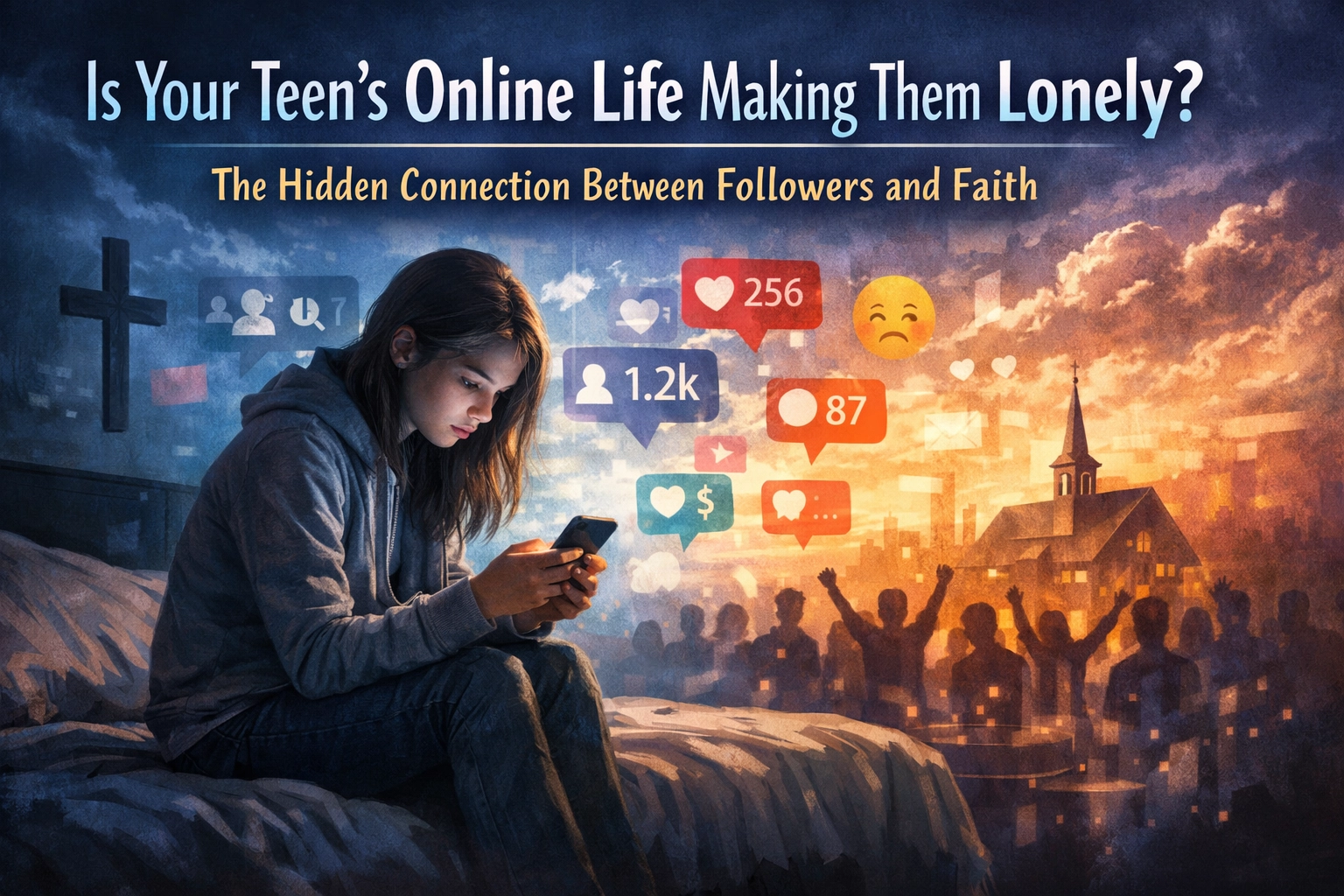
Your teen has 847 followers. They're tagged in photos from last weekend's party. Their notifications are buzzing constantly. So why did you find them crying alone in their room last night?
If this sounds familiar, you're not alone. As a parent, you're watching a generation that's more "connected" than ever: yet somehow, they're lonelier than previous generations. And it's leaving both teens and parents confused, frustrated, and wondering where God fits into this digital mess.
The Loneliness Paradox: More Followers, Less Connection
Here's what might surprise you: 95% of teens own smartphones and spend countless hours online, but research shows heavy social media users are three times more likely to feel isolated compared to teens who use it less. Let that sink in for a moment.
Your teen can video chat with friends across the country, scroll through hundreds of posts, and message dozens of people: all while feeling utterly alone. It's like being surrounded by people at a party but having no one to really talk to.

The truth is, there's a big difference between being connected and feeling connected. And our kids are learning this the hard way.
What's Really Happening Behind the Screen
When we dig deeper, we start to see why social media can actually increase loneliness instead of curing it:
The FOMO Trap Fear of Missing Out isn't just a catchy acronym: it's a real source of anxiety for teens. When your daughter sees her friends at a gathering she wasn't invited to, or when your son watches everyone else having "perfect" experiences, it creates a compulsive need to check constantly. Ironically, the more they check to feel included, the lonelier they become.
The Comparison Game Social media has become a highlight reel where everyone's life looks filtered, flawless, and fabulous. Your teen is comparing their behind-the-scenes reality to everyone else's carefully curated performance. No wonder they're feeling inadequate. As Theodore Roosevelt said, "Comparison is the thief of joy": and social media has turned it into a 24/7 robbery.
The Face-to-Face Deficit Here's something critical: humans were designed for in-person connection. God created us as relational beings (Genesis 2:18). But when screen time replaces face time, something essential gets lost. A "like" on a post can never replace a hug from a friend or a deep conversation over coffee.

The "Followers" We Really Need
This is where faith enters the conversation in a powerful way.
Our teens are chasing followers, likes, and validation from people who might not even know them. Meanwhile, they're missing the One who knows them completely and loves them unconditionally. Jesus didn't say, "Get as many followers as possible." He said, "Follow me" (Matthew 4:19).
There's a beautiful irony here: the only "Follower" relationship that matters is when we choose to follow Christ. Everything else is backwards.
When teens pour their identity into their follower count, they're building their house on sand (Matthew 7:24-27). One mean comment, one dropped friendship, one viral embarrassment: and it all comes crashing down. But when they ground their identity in being a beloved child of God, they have a foundation that no algorithm can shake.
Not All Screen Time Is Created Equal
Before we throw all the devices out the window, let's be fair: not all social media use is harmful. Research shows that some platforms actually reduce loneliness. For example, WhatsApp: which focuses on direct messaging with people you actually know: is associated with lower loneliness levels.
The pattern? Active, intentional connection with real relationships helps. Passive scrolling and comparing hurts.
About 52% of teens report that social media makes them feel more accepted and supported. For some kids: especially those who are marginalized, struggling with their identity, or living in isolated areas: online communities can be a lifeline.
The key is helping your teen use these tools intentionally, not compulsively.

Five Grace-Centered Ways to Help Your Teen
1. Create Phone-Free Family Time Designate meals, Sunday afternoons, or evening walks as device-free zones. Model this yourself: your teen is watching. Use this time to have real conversations, not just logistical check-ins. Ask open-ended questions and actually listen.
2. Help Them Audit Their Feed Sit down with your teen (without judgment) and scroll through their social media together. Ask: "How does this account make you feel?" If it triggers comparison, anxiety, or inadequacy, it's okay to unfollow. Proverbs 4:23 reminds us to guard our hearts: and that includes what we let into our minds daily.
3. Encourage Real-World Community Help your teen build face-to-face friendships through youth group, sports, volunteer opportunities, or hobby-based groups. Connection happens best when we're physically present with others. The early church understood this: they met together regularly, shared meals, and did life together (Acts 2:42-47).
4. Teach Them to Pause Before Posting Talk about the difference between sharing authentically and performing for approval. Ask: "Are you posting this to connect with others or to get validation?" There's nothing wrong with sharing life online, but the motivation matters.
5. Point Them to Their True Identity Remind your teen regularly that their worth isn't measured in likes, followers, or comments. They are "fearfully and wonderfully made" (Psalm 139:14), loved unconditionally by God, and have infinite value: not because of what they do or how many people follow them, but because of who they are in Christ.
When to Seek Additional Support
Sometimes, loneliness crosses over into depression, anxiety, or other mental health concerns that need professional attention. If your teen is:
Withdrawing from activities they once enjoyed
Experiencing significant mood changes
Talking about feeling hopeless or worthless
Spending excessive amounts of time online to escape
Showing changes in sleep, appetite, or academic performance
It might be time to reach out for help. Seeking counseling isn't a sign of weak faith: it's a sign of wisdom. Just as we'd see a doctor for a broken bone, professional counseling can provide tools and support for emotional and mental health struggles.
At Grace Journey Counseling, we understand the unique challenges facing teens today. Our faith-based approach helps young people navigate the digital world while staying grounded in their identity in Christ. Sometimes, the most loving thing a parent can do is connect their teen with someone who can help them process these complex feelings.
Moving Forward with Grace
Here's the bottom line: your teen doesn't need more followers. They need deeper connection: with real friends, with family, with themselves, and with God.
The good news? Loneliness isn't a life sentence. With intentional choices, supportive relationships, and a faith foundation, your teen can navigate the digital world without losing themselves in it.
Start small. Have a conversation tonight. Put the phones away during dinner. Ask how they're really doing. And remind them: and yourself: that in a world obsessed with followers, the only following that truly matters is following the One who never unfollows us.
God's grace is sufficient for every challenge our kids face, including the loneliness that comes with growing up in a hyperconnected yet disconnected world. Trust the journey, stay present, and remember that healing happens one intentional moment at a time.
If your family needs support navigating these challenges, consider reaching out. You don't have to figure this out alone: and your teen doesn't either.
Comments